The Book of Sand is a queer book in the sense that it's strange, as I've written already, but also because there is something peculiarly sexual about it.
Every book has a place that it occupies based on the categories attributed to it by humans—just think about how books are shelved at public libraries and you'll know what I mean. Now, when the narrator of "El Libro de Arena" purchases the Book of Sand, he believes at first that the book should substitute the blackletter Wycliffe Bible:
"I though of hiding the Book of Sand in the space left by the Wycliffe, but I finally opted to hide it behind some shoddy volumes of the Thousand and One Nights."
The fact that he hides the Book of Sand behind the Thousand and One Nights is relevant for both postcolonial readings and queer readings. For postcolonial readings because Borges compares the fantastic nature of the Book of Sand with the magical tales found in the Thousands and One Nights. Any preliminary reading of the Thousand and One Nights also reveals that apart from being fantastic, the background of the tales and the frame story are also sexual. At least in this sense the Book of Sand has sexual connotations to it.
But let me get back to the quote. So he hides the Book of Sand behind other books. One would think he's placing the books on a bookshelf; however, in a different Borges story we find out where precisely the books are located. In "The Other," an older Borges meets a younger skeptical Borges and has to prove that they are the same person. He tells the younger Borges that he knows what he keeps in his closet both literally and metaphorically:
"In the wardrobe closet in your room, there are two rows of books: the three volumes of Lane's translation of the Thousand and One Nights—which Lane called The Arabian Nights Entertainment—with steel engravings and notes in fine print between the chapters, Quicherat's Latin dictionary, Tacitus' Germania in Latin and in Gordon's English version, a Quixote in the Garnier edition, a copy of Rivera Indarte's Tablas de Sangre signed by the author, Carlyle's Sartor Resartus, a biography of Amiel, and, hidden behind the others, a paperbound volume detailing the sexual customs of the Balkans. Nor have I forgotten a certain afternoon in a second-floor apartment on the Plaza Dubourg."
Even though Borges was a private man and would not speak about his private life, especially about his relationships with women, now we know the contents of Borges' closet: He has his favorite books hidden away there, including a book which we can technically term pornographic even though he only gives us a description of it and doesn't give us its title ("a paperbound volume detailing the sexual customs of the Balkans"). And he also tantalizingly gives us a detail which may or may not refer to some sexual episode in Borges' life ("Nor have I forgotten a certain afternoon..."). In this small confession, then, Borges tells us the contents of his closet, or if I phrase this differently, Borges has come out of the closet—as much as Borges can or would come out anyway.
My point is that when the narrator of "El Libro de Arena" hides the Book of Sand, he's placing it in the closet, hidden away behind his stash of personally favorite books. By hiding the Book of Sand in his closet, the book becomes a part of Borges' private and sexual identity, that aspect of his life which he does not openly share with others, which is secretive, closeted, undisclosed, personal.
If we think about the Book of Sand as connected with Borges' private-sexual identity (private because sexual and sexual because private), then his failed attempt to catalog and categorize the Book of Sand tells us something about the queer nature of his private-sexual identity. Borges cannot understand his own private-sexual identity, he cannot catalog or categorize it, he can only hide it away from others. No wonder Borges never spoke about his private and sexual life: he never understood it.
Sunday, January 6, 2013
Friday, January 4, 2013
"The Collar" by George Herbert
As I said in my first blog, borgesian bibliophilia is my method for writing not only on Borges, but on other writers also. For today, I will take a break from Borges (because every organism needs a Sabbath to grow and ripen the more) and write about the poet whose line stands as a curious epigram at the beginning of "El Libro de Arena"—George Herbert and his poem "The Collar."
A few autobiographical notes on George Herbert. He was an Anglican priest and near contemporary of John Donne. Herbert's mother, Magdalen, was actually a friend and patron of John Donne. While Donne was appointed Dean of St. Paul's Cathedral in the city of London and thereby preached to statesmen, Herbert was priest of a small parish in Wiltshire.
Among literates, it is also common to compare the poetry of Donne and Herbert. While Donne's poetry is learned and alludes to ancient cosmology and philosophy, Herbert derives his metaphors from Scripture. Some metaphors include the body as temple, the heart as altar, redemption as tenantry, and the believer's lifespan as pilgrimage.
For more on George Herbert (1593-1633) please visit your local knowledge archive, and by that I mean a public library.
Here's the poem:
There are really only two parts to this poem: the last four lines marked by the coordinating conjunction "But" and everything else. In the first section he raves against his childish relationship with authority (whether divine or civil) and yearns for liberty, and in the second section he submits, seemingly out of fear, to the paternal and regal voice of what Lacan calls the Father.
So what is this poem about?
It's about his inability to outgrow the Father.
Despite his reneging: his thirty-two line soliloquy in which he asks himself rhetorical questions that are complaints against his present unprofitable condition as servant and child of the Father, and in which he attempts to free himself by way of imperatives ("recover," "leave," "forsake," "away," "call," and "tie"); despite the powerful rhetoric of his free verse ("my lines and life are free," he says) that marks his break from poetic and authorial tradition; and despite the madness and violence of his behavior (of striking the board, of crying, of raving fiercely and wildly)—he is bowed into submission (and I find this quite unsettling) by an audible or inner voice.
The voice that calls him "Child!" is the voice of the Father, both the voice of the Christian deity and the voice of the King. A marxist might call the voice "the voice of ideology," which blinds the consciousness of the individual through and through in such a way that even when individuals reason out their need for freedom and liberty and their need to escape and fight oppression, ideology tightens its hold much more strongly. The voice of the Father substitutes the voice (soliloquy) of the individual.
If individuals imagine they will free themselves of oppression, of sighing and pining and crying, then the voice of the Father denies any such liberty by asserting its power through fear and reinforcing the hierarchical structures already in place of father and son, king and servant.
I find interesting that in this late Renaissance poem we find the seeds of what will later bloom (more than a century later) into the violent American and French revolutions meant to free the individual from monarchical and religious tyranny. And, despite Herbert's Christian poetics, his education in renaissance humanism still puts up a fight for individual liberty through the form of free verse.
Herbert's free verse in this poem may be one of the earliest in English. It won't be until two centuries later that Walt Whitman will take up the form to celebrate the early American spirit of independence. Sure he was unable to outgrow the voice of the Father in his own time, but we can see the development of the child into the independent adult.
Here's another poem by George Herbert, titled "The Altar." Enjoy.
A few autobiographical notes on George Herbert. He was an Anglican priest and near contemporary of John Donne. Herbert's mother, Magdalen, was actually a friend and patron of John Donne. While Donne was appointed Dean of St. Paul's Cathedral in the city of London and thereby preached to statesmen, Herbert was priest of a small parish in Wiltshire.
Among literates, it is also common to compare the poetry of Donne and Herbert. While Donne's poetry is learned and alludes to ancient cosmology and philosophy, Herbert derives his metaphors from Scripture. Some metaphors include the body as temple, the heart as altar, redemption as tenantry, and the believer's lifespan as pilgrimage.
For more on George Herbert (1593-1633) please visit your local knowledge archive, and by that I mean a public library.
Here's the poem:
The Collar
I struck the board and cried, "No more;
I will abroad!
What? shall I ever sigh and pine?
My lines and life are free, free as the road,
Loose as the wind, as large as store.
Shall I be still in suit?
Have I no harvest but a thorn
To let me blood, and not restore
What I have lost with cordial fruit?
Sure there was wine
Before my sighs did dry it; there was corn
Before my tears did drown it.
Is the year only lost to me?
Have I no bays to crown it,
No flowers, no garlands gay? all blasted?
All wasted?
Not so, my heart; but there is fruit,
And thou hast hands.
Recover all thy sigh-blown age
On double pleasures: leave thy cold dispute
Of what is fit and not. Forsake thy cage,
Thy rope of sands,
Which petty thoughts have made, and made to thee
Good cable, to enforce and draw,
And be thy law,
While thou didst wink and wouldst not see.
Away! take heed;
I will abroad.
Call in thy death's-head there; tie up thy fears.
He that forbears
To suit and serve his need,
Deserves his load."
But as I rav’d and grew more fierce and wild
At every word,
Methoughts I heard one calling, Child!
And I replied, My Lord.
So what is this poem about?
It's about his inability to outgrow the Father.
Despite his reneging: his thirty-two line soliloquy in which he asks himself rhetorical questions that are complaints against his present unprofitable condition as servant and child of the Father, and in which he attempts to free himself by way of imperatives ("recover," "leave," "forsake," "away," "call," and "tie"); despite the powerful rhetoric of his free verse ("my lines and life are free," he says) that marks his break from poetic and authorial tradition; and despite the madness and violence of his behavior (of striking the board, of crying, of raving fiercely and wildly)—he is bowed into submission (and I find this quite unsettling) by an audible or inner voice.
The voice that calls him "Child!" is the voice of the Father, both the voice of the Christian deity and the voice of the King. A marxist might call the voice "the voice of ideology," which blinds the consciousness of the individual through and through in such a way that even when individuals reason out their need for freedom and liberty and their need to escape and fight oppression, ideology tightens its hold much more strongly. The voice of the Father substitutes the voice (soliloquy) of the individual.
If individuals imagine they will free themselves of oppression, of sighing and pining and crying, then the voice of the Father denies any such liberty by asserting its power through fear and reinforcing the hierarchical structures already in place of father and son, king and servant.
I find interesting that in this late Renaissance poem we find the seeds of what will later bloom (more than a century later) into the violent American and French revolutions meant to free the individual from monarchical and religious tyranny. And, despite Herbert's Christian poetics, his education in renaissance humanism still puts up a fight for individual liberty through the form of free verse.
Herbert's free verse in this poem may be one of the earliest in English. It won't be until two centuries later that Walt Whitman will take up the form to celebrate the early American spirit of independence. Sure he was unable to outgrow the voice of the Father in his own time, but we can see the development of the child into the independent adult.
Here's another poem by George Herbert, titled "The Altar." Enjoy.
Wednesday, December 26, 2012
My Translation of "El Libro de Arena" by Jorge Luis Borges
by Jorge Luis Borges
...thy rope of sands...
GEORGE HERBERT (1593-1623)
I live alone, on a fourth floor off of Belgrano Street. Some months ago in the afternoon, I heard a sound on the door. I opened and a stranger came in. He was a tall man with fading features. At least my myopia saw him this way. His whole aspect was of dignified poverty. He wore gray and had a gray suitcase in hand. I immediately felt he was a stranger. At first I thought he was old; then I realized that his scarce blonde hair, in the manner of Scandinavians, had deceived me. In the course of our conversation, which would not last an hour, I learned he came from the Orkneys.
I pointed him to a chair. The man took a while to speak. He exhaled melancholy, as I do now.
"I sell Bibles," he told me.
Not without pedantry, I answered:
"In this house there are some English Bibles, including the first, the one by John Wycliffe. I also have one by Cipriano de Valera, one by Luther, which is in literary terms the worst, and one copy of the Latin Vulgate. As you can see, I don't exactly need Bibles."
He answered after some silence.
"I don't just sell Bibles. I can show you a sacred book that will perhaps interest you. I obtained it on the outskirts of Bikaner."
He opened the suitcase and left the book on the table. It was a clothbound volume in octavo. It had undoubtedly passed through many hands. I examined it; its unfamiliar weight surprised me. On the cover it read Holy Writ and on the bottom Bombay.
"It's from the nineteenth century," I observed.
"I don't know. I have never known," was the response.
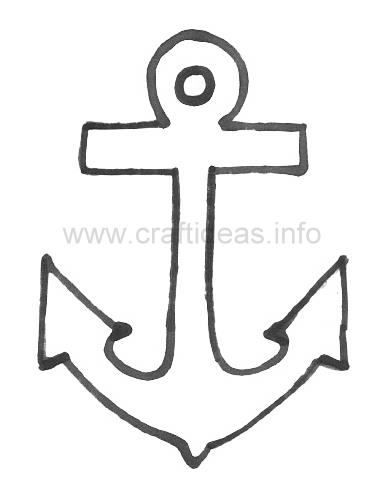
I opened it blindly. The characters looked strange to me. The pages, which looked worn and of poor typography, were printed in double columns in the manner of the Bible. The text was tight and ordered in versicles. On the top corner of the pages there were Arabic-like scripts. It caught my attention that the even pages had, for example, the number 40.514 and the following odd page, 999. I turned the book; the back was numbered with eight scripts. It had a small illustration, much in the way that dictionaries do: an anchor drawn with a pen as if by the sloppy hand of a child.
It was then that the stranger told me:
"Take a good look at it. You will never see it again."
There was a threat in the affirmation, but not in the voice.
I marked the place and closed the volume. I opened it immediately. I searched in vain for the figure of the anchor, page after page. To hide my puzzlement, I said:
"This is some version of the Scripture in some Hindustani language, isn't that so?"
"No," he replied.
Then he lowered his voice as if to confirm a secret:
"I obtained it in a town on the plain in exchange for some rupees and the Bible. Its owner didn't know how to read. He suspected that in the Book of Books he perceived an amulet. He was of the lowest caste; people couldn't step on his shadow without contamination. He told me his book was called the Book of Sand because neither the book nor sand have a beginning or end."
He asked me to find the first page.
I placed my left hand on the cover and with my thumb opened very near the index. It was all useless: various pages always interposed themselves between the cover and my hand. It was as if they grew from the book.
"Now look for the last page."
I failed at that too; I barely stuttered in a voice that wasn't mine:
"This can't be."
Still in a low voice, the Bible salesman told me:
"It can't be, but it is. The number of pages in this book is exactly infinite. None is the first; none is the last. I don't know why they're numbered in that arbitrary way. Perhaps to give the idea that the terms in an infinite series admit any number."
Then, as if he thought in a loud voice:
"If space is infinite, we are at any point in space. If time is infinite, we are at any point in time."
His deliberations irritated me. I asked him:
"You are religious, undoubtedly?"
"Yes, I'm a Presbyterian. My conscience is clear. I'm sure of not having deceived the native when I gave him the Word of God in exchange for his diabolical book."
I assured him that nothing was to be reproached, and I asked him if he was just passing by these lands. He answered that he thought of returning to his fatherland within a few days. It was then I discovered he was Scottish and from the Orkney islands. I told him I personally loved Scotland for the love of Stevenson and Hume.
"And Robbie Burns," he corrected.
While we talked I continued exploring the infinite book. With false indifference I asked him:
"Are you considering offering this curious specimen to the British Museum?"
"No. I offer it to you," he answered; and he set a large sum.
I told him, in all truth, that the sum was inaccessible to me, and I continued thinking. After a few minutes I had weaved my plan.
"I propose an exchange," I said. "You obtained this volume for some rupees and the Sacred Scriptures; I'll offer you the whole of my retirement fund, which I have just received, and the Wycliffe Bible in gothic letter. I inherited it from my parents."
"A blackletter Wycliffe!" he murmured.
I went to my dormitory and brought him the money and the book. He turned the pages and studied the cover with the fervor of a bibliophile.
"Done deal," he said.
I was surprised he didn't retract. Only after did I understand that he had entered my home with the purpose of selling me the book. He didn't count the bills; he just put them away.
We talked of India, of the Orkneys, and of the Norwegian jarls that ruled them. It was night when the man left. I have not seen him since, nor do I know his name.
I thought of hiding the Book of Sand in the space left by the Wycliffe, but I finally opted to hide it behind some shoddy volumes of the Thousand and One Nights.
I lay on my bed and did not sleep. At three or four in the morning I turned on the light. I looked for the impossible book and flipped the pages. On one of them I saw a mask reproduced. One of the pages, I don't know which one, had a numeral elevated to the ninth power.
I showed no one my treasure. To the luck of possession was added the fear that it would be stolen, and then the paranoia that it was not truly infinite. Those two suspicions aggravated my old misanthropy. I had few friends left; I stopped seeing them. A prisoner of the Book, I hardly went out. I examined the worn cover and binding with a magnifying glass and rejected the possibility of deception. I proved that the small illustrations were separated by two-thousand pages each. I annotated these alphabetically in a notebook, which filled up in no time. They never repeated. At night, during the scarce intervals permitted me by insomnia, I dreamed of the book.
Summer waned, and I understood that the book was monstrous. It did not help me to consider that I was no less monstrous, I who perceived it with eyes and touched it with ten fingers with nails on them. I felt it was an object of nightmare, an obscene thing that disgraced and corrupted reality.
I thought of lighting it on fire, but feared that the flame would also be infinite and suffocate the planet in smoke.
I remembered reading that the best place to hide a leaf is in the forest. Before retiring I had worked at the National Library, which housed nine-thousand books; I knew that on the right hand of the entrance a staircase curved down into the basement where the periodicals and maps were kept. I took advantage of the employees' inattention and abandoned the Book of Sand in one of the humid shelves. I tried not to note the height or distance from the door. I feel a bit of relief, but I don't even want to pass by Agüero Street.
Wednesday, December 19, 2012
The Book of Sand as Hypertext
If the more geometrico explanation didn't work for the narrator of "El Libro de Arena," I nonetheless sense that he hinted at the nature of the Book of Sand and then completely forgot about it for the rest of the narrative. If "the line consists of an infinite number of points; the plane, of an infinite number of lines; the volume, of an infinite number of planes; the hypervolume, of an infinite number of volumes"—and notice that we move from the one dimensional (line) to the two dimensional (plane) to the three dimensional (volume) and finally to the four dimensional (hypervolume)—then, in what dimension does the Book of Sand reside?
It resides in the hyper dimension and it is therefore a hypertext.
I could have used the word hypervolume instead of hypertext, since Jorge Luis Borges actually uses the word "hypervolume" in the section I just quoted and since he uses the word "volume" to describe the Book of Sand in his afterword to the collection of short stories, El Libro de Arena. He says, "Two unlucky and inconceivable objects are the subject of the last two stories. 'The Disk' is the Euclidean circle, which has but one face; 'The Book of Sand,' a volume of innumerable pages" (emphasis mine).
I could have used hypervolume, with "volume" used as a pun for books and three-dimensional objects, yet I chose to use the word hypertext. The word text, if you remember, means literally "to weave" or "a thing woven" (as in the word textile) at the same time that it means "a book or written code." And there are two instances in which weaving is alluded to in the short story. The first instance is the epigram, which reads
and by the way, a rope is merely a weaving of several strands of twine. The second instance is the mention that the Book of Sand is "a volume in octavo, bound in cloth," and "cloth" is a weaving of cotton material.
I also use hypertext to retain the idea that the Book of Sand is a holy text, just like the Bible is a book whose verses are usually referred to as texts. Holy texts are always above us and represent that which is "over, above, beyond, exceedingly, ... overmuch, above measure," which is the meaning of the preposition and adverb hyper. It is this aboveness that makes the narrator feel like a beast: "It helped nothing to consider that I was no less monstrous [than the book], I who looked on it with eyes and touched it with ten fingers with nails."
And of course, I want hypertext to echo with our contemporary idea of hypertext as digital text displayed on computers, text that is not printed with ink on a page, a very material substance, but text written with HTML language codes and existing in airy nothingness. The ether is the heaven and realm of the new digital world we have invented, and the sacred secular text, or hypertext, of this digital dimension is "the Book of Books"—the Book of Sand.
I could have used the word hypervolume instead of hypertext, since Jorge Luis Borges actually uses the word "hypervolume" in the section I just quoted and since he uses the word "volume" to describe the Book of Sand in his afterword to the collection of short stories, El Libro de Arena. He says, "Two unlucky and inconceivable objects are the subject of the last two stories. 'The Disk' is the Euclidean circle, which has but one face; 'The Book of Sand,' a volume of innumerable pages" (emphasis mine).
I could have used hypervolume, with "volume" used as a pun for books and three-dimensional objects, yet I chose to use the word hypertext. The word text, if you remember, means literally "to weave" or "a thing woven" (as in the word textile) at the same time that it means "a book or written code." And there are two instances in which weaving is alluded to in the short story. The first instance is the epigram, which reads
and by the way, a rope is merely a weaving of several strands of twine. The second instance is the mention that the Book of Sand is "a volume in octavo, bound in cloth," and "cloth" is a weaving of cotton material.
I also use hypertext to retain the idea that the Book of Sand is a holy text, just like the Bible is a book whose verses are usually referred to as texts. Holy texts are always above us and represent that which is "over, above, beyond, exceedingly, ... overmuch, above measure," which is the meaning of the preposition and adverb hyper. It is this aboveness that makes the narrator feel like a beast: "It helped nothing to consider that I was no less monstrous [than the book], I who looked on it with eyes and touched it with ten fingers with nails."
And of course, I want hypertext to echo with our contemporary idea of hypertext as digital text displayed on computers, text that is not printed with ink on a page, a very material substance, but text written with HTML language codes and existing in airy nothingness. The ether is the heaven and realm of the new digital world we have invented, and the sacred secular text, or hypertext, of this digital dimension is "the Book of Books"—the Book of Sand.
The Book of Sand in the Geometrical Manner
The opening of "El Libro de Arena" seems like a false start on the part of the narrator:
Not knowing whether to begin with a geometrical explanation that may or may not help the reader understand the infinite nature of the Book of Sand, the narrator opts for a narrative convention instead—the convention of affirming the truth of a fictive tale.
I think the narrator's choice of narrative convention over mathematical explanation is interesting. Jorge Luis Borges had read his Baruch Spinoza and was familiar with Ethica More Geometrico Demonstrata (or more simply knows as Ethics), Spinoza's most famous work in which he explains the universe and existence "in the manner of geometry" (more geometrico) by offering propositions, definitions, scholia, and corollaries. (Need I say that Baruch Spinoza had borrowed the geometric method from Rene Descartes, the father of rationalism?) In this way, Spinoza sought to write a philosophy that necessarily follows from axioms to propositions to inevitable conclusions, very much in the imitation of proofs in mathematics.
But more importantly, Spinoza sought to write and deduce an ethical system from his geometrical philosophizing. After discovering the principle that everything that exists can be called God or Nature, Spinoza goes on to formulate several propositions and he argues that "intellectual love," understanding things as they are, not weeping or laughing at them, brings happiness, which is its own virtue. This is his ethical position.
Now, I only bring up Spinoza to ask the following question: If the narrator abandoned the more geometrico in favor of a narrative convention, did the narrator also abandon questions of ethics? Or has he merely repositioned ethics in the realm of fiction? Has the narrator missed an opportunity for intellectual love, to understand the universe and its objects, the Book of Sand in particular, as they are? Did the narrator demonize the Book of Sand by abandoning it? And could the narrator have partaken of the infinity of the Book of Sand by dedicating himself wholly to it? I have no answers to this at the moment, but I may seek answers in a separate blog.
This is all I can give for now.
"The line consists of an infinite number of points; the plane of an infinite number of lines; the volume of an infinite number of planes; the hypervolume of an infinite number of volumes...No, this more geometrico is decidedly not the best way to begin my tale. To affirm this [story] is true is now a convention of all fantastic tales; mine, however, is true."
Not knowing whether to begin with a geometrical explanation that may or may not help the reader understand the infinite nature of the Book of Sand, the narrator opts for a narrative convention instead—the convention of affirming the truth of a fictive tale.
I think the narrator's choice of narrative convention over mathematical explanation is interesting. Jorge Luis Borges had read his Baruch Spinoza and was familiar with Ethica More Geometrico Demonstrata (or more simply knows as Ethics), Spinoza's most famous work in which he explains the universe and existence "in the manner of geometry" (more geometrico) by offering propositions, definitions, scholia, and corollaries. (Need I say that Baruch Spinoza had borrowed the geometric method from Rene Descartes, the father of rationalism?) In this way, Spinoza sought to write a philosophy that necessarily follows from axioms to propositions to inevitable conclusions, very much in the imitation of proofs in mathematics.
But more importantly, Spinoza sought to write and deduce an ethical system from his geometrical philosophizing. After discovering the principle that everything that exists can be called God or Nature, Spinoza goes on to formulate several propositions and he argues that "intellectual love," understanding things as they are, not weeping or laughing at them, brings happiness, which is its own virtue. This is his ethical position.
Now, I only bring up Spinoza to ask the following question: If the narrator abandoned the more geometrico in favor of a narrative convention, did the narrator also abandon questions of ethics? Or has he merely repositioned ethics in the realm of fiction? Has the narrator missed an opportunity for intellectual love, to understand the universe and its objects, the Book of Sand in particular, as they are? Did the narrator demonize the Book of Sand by abandoning it? And could the narrator have partaken of the infinity of the Book of Sand by dedicating himself wholly to it? I have no answers to this at the moment, but I may seek answers in a separate blog.
This is all I can give for now.
Thursday, December 13, 2012
What is the Book of Sand?
"What is the Book of Sand?" seems like a straightforward question. I have several answers to this inquiry and none of them are mutually exclusive. The Book of Sand is
- the Bible's doppelgänger;
- one of several borgesian artifacts that corrupt reality—the others are the blue tigers, the disk, the zahir, the city of the immortals, the aleph, and of course the labyrinth;
- an encyclopedia;
- a mathematically infinite object; and
- a hypertext.
In the story, there is mention of a title, binding, place of publication, and other specifications for the Book of Sand, but there is no mention of an author. We can suppose that because the book seems to be an encyclopedia of sorts, with entries like "anchor" and "mask," its has many authors, and because it has infinite entries, it has infinite authors.
My following statement may be illogical but I will venture it anyway:
If a book is written by everyone, then it is written by no one.
No one wrote the Book of Sand. I am reminded of Roland Barthes' "The Death of the Author," in which he argues against the romantic notion of the author as genius and the author as sole authority over the text. He argues that when a person writes, their personhood disappears because writing consists of "several indiscernible voices...to which we cannot assign a specific origin." It is as though the writer is merely a "shaman or speaker, whose 'performance' may be admired (that is, his mastery of the narrative code), but not his 'genius'"; that is, the words pass through the writer, they are not produced by the writer.
And if there is no author, the meaning of the text is unsettled, ambiguous, fluid, changing, and unstable. The text is not the utterance of one voice, "the text is a tissue of citations, resulting from the thousand sources of culture." The Book of Sand, then, becomes meaningless gibberish, the sounds of an infinite babel of voices.
In this sense the Book of Sand is the Bible's doppelgänger, the dark mirror image of Scripture. The Bible has one authoritative Author speaking law to humanity; the Book of Sand has no authors speaking no special message to no one. And because it has no special message that reifies reality, the Book of Sand, as the narrator states, "defile[s] and corrupt[s] reality."
The Book of Sand has no authors speaking no special message to no one. Instead, it is all hypertext.
But I will leave that for later.
That is all I can give for now. (receding into silence)
Monday, December 10, 2012
"El Libro de Arena" and Book Collecting
If we ignore the infinite aspect of the Book of Sand, Borges' short story "El Libro de Arena" is about two bibliophiles and book collecting.
In “El Libro de Arena” a blind and aged narrator, who is probably
Borges, meets a Bible salesman who connives him into buying the Book of Sand, a
very material and physical tome of a book that is nonetheless infinite. Being a book collector and bibliophile, the narrator describes the aspects and
dimensions of the infinite book: it is a clothbound volume in octavo printed in double columns (like the Bible), and it is unusually heavy and worn through much handling. Also like the Bible, it is composed in versicles and carries the imprint of Holy Writ. He notes that Bombay, India is the place of publication, which is Borges' nod to the Orient that produced The Thousand and One Nights. And finally, the narrator, attempting to create a catalogue of the illustrations, notes that the illustrations are “spaced at two-thousand page
intervals,” two of which we know about, an anchor and a mask.
The Bible salesman, who I guess is not really a Bible salesman, trades his Book of Sand for the narrator's "blackletter Wyclif" and "with a bibliophile's zeal he turned the pages and studied the binding," examining his new acquisition. John Wycliffe translated the Bible from the Latin into English in the year 1382, which is before the invention of the printing press by Johannes Gutenberg in 1440. A Bible with blackletter font (which is also known as Old English font or Gothic Script) means that this copy of the Bible was copied by hand, is one of the first Bibles in the English language, and is therefore an extremely rare and valuable item for book collectors and museums.
Any story about property includes a narrative about the method of acquisition, and so the Bible salesman tells us that he obtained the Book of Sand from a native in the outskirts of Bikaner, India for some rupees and a Bible. This information about the previous owners and history of the books transmission is important for any book collector because as Walter Benjamin, a true bibliophile, tells us in "Unpacking My Library": "The period, the region, the craftsmanship, the former ownership—for a true collector the whole background of an item adds up to a magic encyclopedia whose quintessence is the fate of his object."
Benjamin's "talk about book collecting" is about "the relationship of a book collector to his possessions" and he focuses on the act of collecting books rather than on the book collection itself. According to Benjamin, a bibliophile through the act of acquisition "renew[s] the old world" and becomes a guardian of a piece of history. For Benjamin, the private collector is a dying breed being replaced by museum and other public collectors, and he mourns the loss of the private collector who alone maintained "the most intimate relationship that one can have to objects"—ownership.
Indeed, the narrator of "El Libro de Arena" tells us of his object fetishism: "I showed no one my treasure. To the joy of possession was added the fear that it would be stolen from me, and to that, the suspicion that it might not be truly infinite." Here ownership results in wildly varying emotional states—jealousy, joy, fear, paranoia, suspicion—all exacerbated by the peculiarity and singularity of the object, an infinite book. The excessive attachment to the object results in an interchangeability between owner and owned, or as Benjamin phrases it, "Not that the [objects] come alive in [the owner]; it is he who lives in them." The terrifying and disturbing essence of the Book of Sand merges with each and every owner, each of whom in the end seek to dispossess themselves of the accursed book.
Pro captu lectoris habent sua fata libelli. Let me offer a purposeful mistranslation: Owners and books share a destiny. If we apply this formula to "El Libro de Arena," the short story becomes a tale of owners dispossessing themselves of a cursed object that "defiled and corrupted reality." And in terms of plot, then, "El Libro de Arena" is a history of the acquisition and voluntary loss of a singular and peculiar book, the Book of Sand. Of course, there is more going on in "El Libro de Arena" than bibliophilia turned bibliophobia, but I will deal with that next time.
This is all I can give for now. (receding into silence)
Indeed, the narrator of "El Libro de Arena" tells us of his object fetishism: "I showed no one my treasure. To the joy of possession was added the fear that it would be stolen from me, and to that, the suspicion that it might not be truly infinite." Here ownership results in wildly varying emotional states—jealousy, joy, fear, paranoia, suspicion—all exacerbated by the peculiarity and singularity of the object, an infinite book. The excessive attachment to the object results in an interchangeability between owner and owned, or as Benjamin phrases it, "Not that the [objects] come alive in [the owner]; it is he who lives in them." The terrifying and disturbing essence of the Book of Sand merges with each and every owner, each of whom in the end seek to dispossess themselves of the accursed book.
Pro captu lectoris habent sua fata libelli. Let me offer a purposeful mistranslation: Owners and books share a destiny. If we apply this formula to "El Libro de Arena," the short story becomes a tale of owners dispossessing themselves of a cursed object that "defiled and corrupted reality." And in terms of plot, then, "El Libro de Arena" is a history of the acquisition and voluntary loss of a singular and peculiar book, the Book of Sand. Of course, there is more going on in "El Libro de Arena" than bibliophilia turned bibliophobia, but I will deal with that next time.
This is all I can give for now. (receding into silence)
Subscribe to:
Posts (Atom)